
Perfectly Imperfect: A Conversation with Aria & Katy from The Slab
On a mild spring day, artists Aria Xiaoyi Shen and Katy Jercich of The Slab stand outside, waiting on the cobblestone pavement in the morning sun. At the time of meeting, the studio’s original home on Hornsgatan is undergoing renovations, so we meet at their temporary premise on Bastugatan in Södermalm.
Pleasantries are exchanged and introductions made, but for some reason we’re not going inside. “Oh yes – the kiln was on and it’s really stunk the place up,” Katy says. I notice all the windows and doors are wide open in a desperate attempt to snuff out the smell. “We’re trying to air it out so it’s not too strong for you,” Aria adds. As the smoky must wears off, I’m invited in and welcomed with the universal sign of a good chat ahead: the kettle going on for a cuppa.
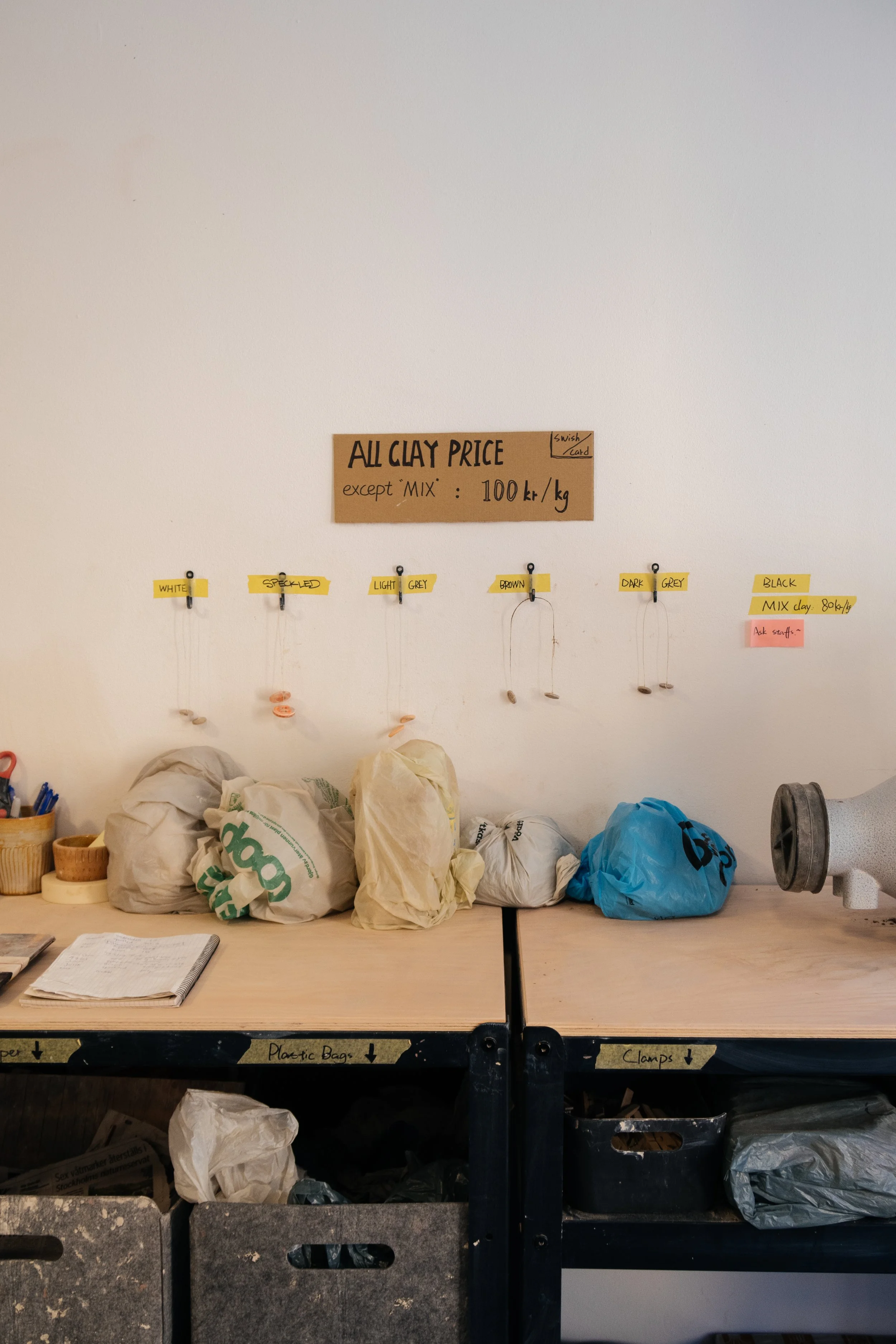
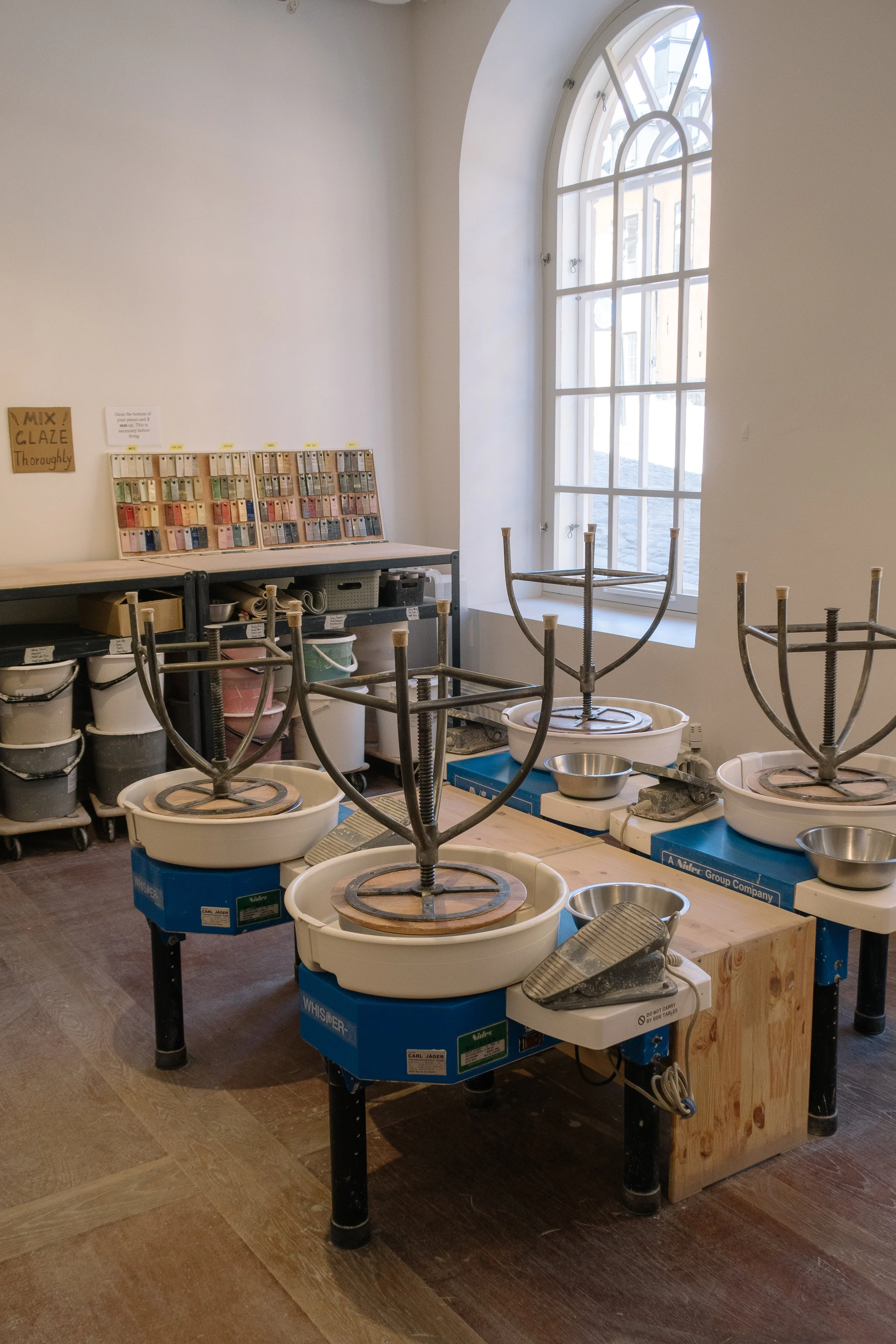
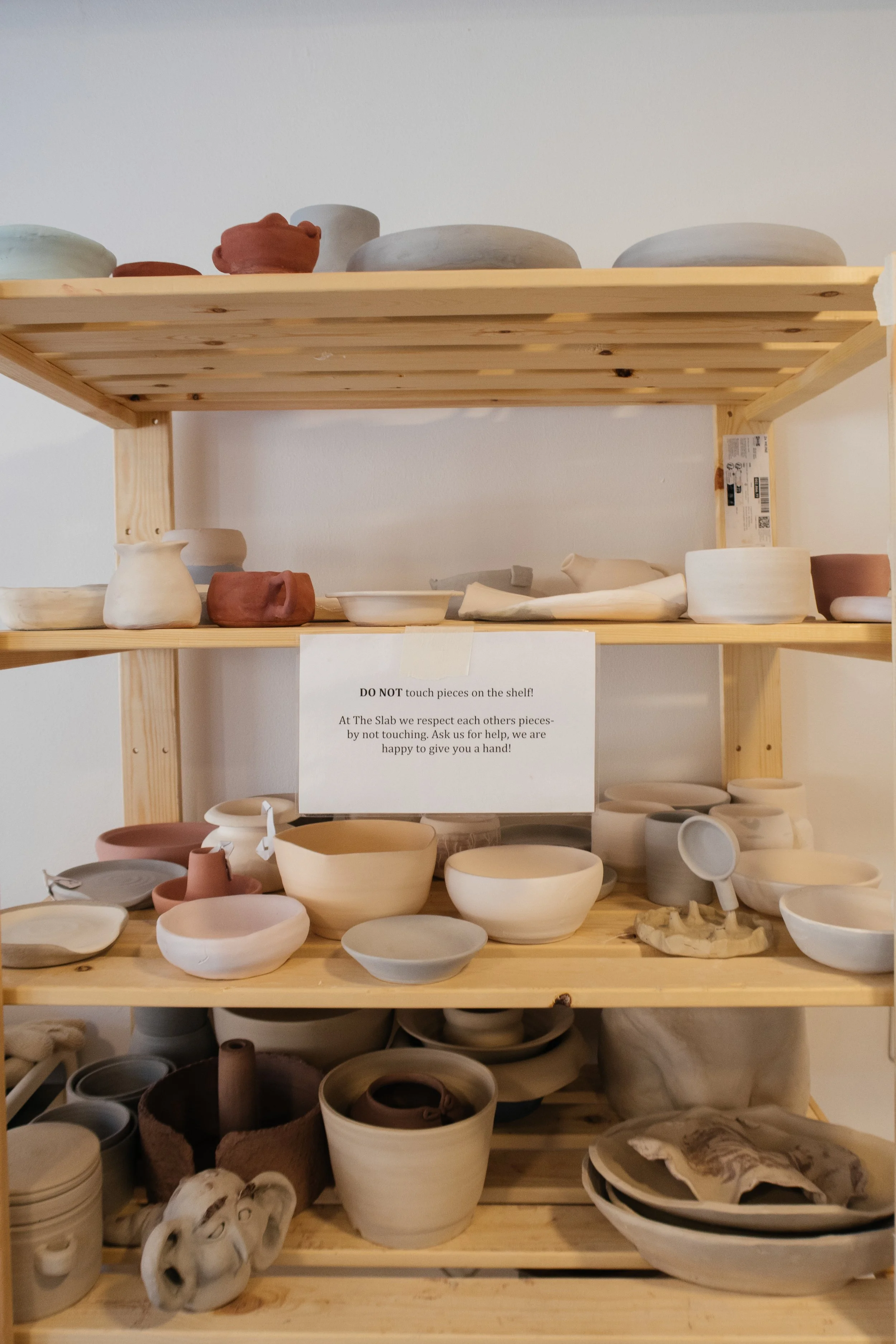
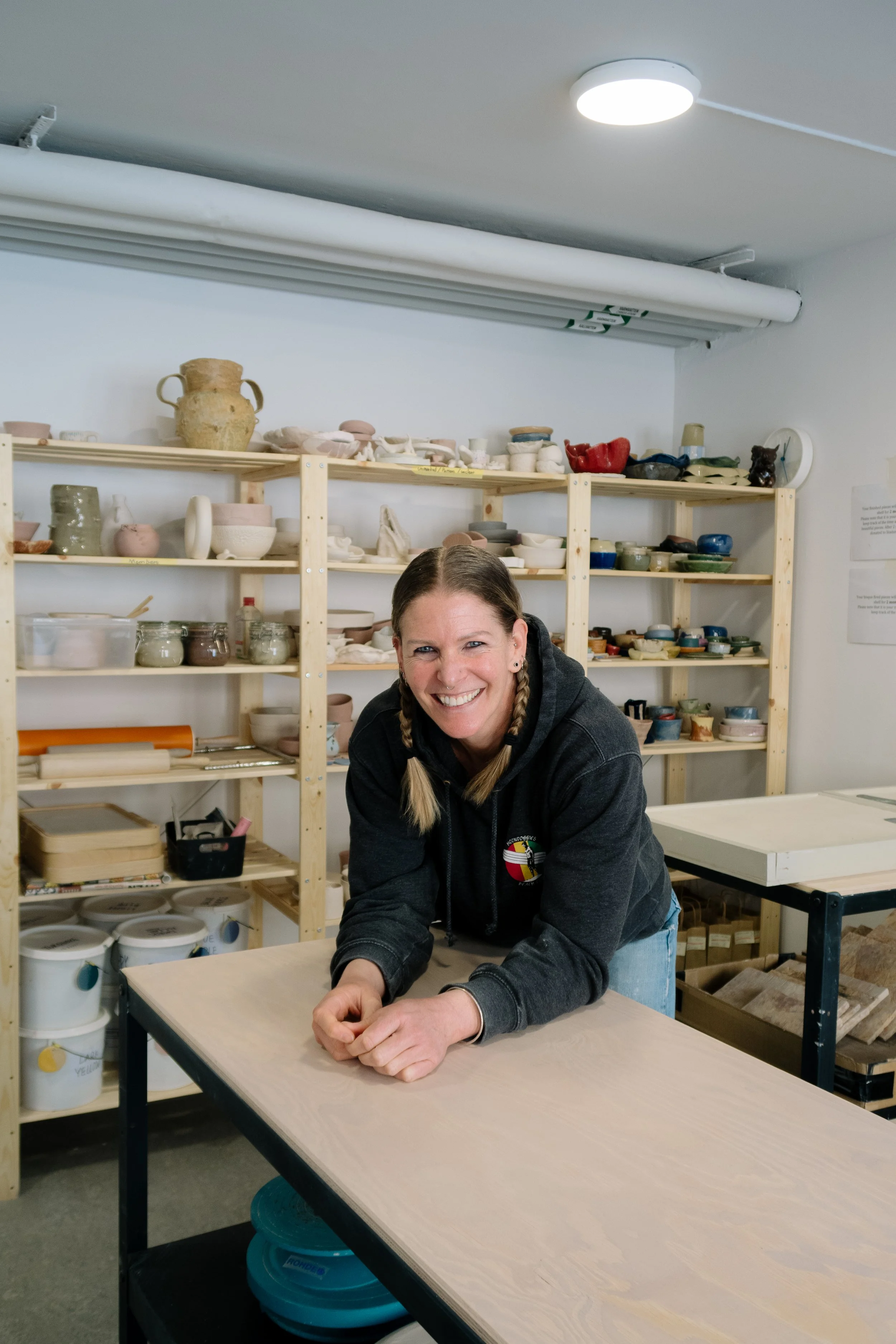
The blueprints and inner workings of a ceramic studio are not foreign to me, with its pugmill, wedging benches, pottery wheels, and jumbo bags of clay. The shelves are lined with ceramics – some waiting to be bisque-fired, others complete and glossy, ready for collection.
I used to be a student at The Slab back in spring 2024, when I enrolled in a five-week beginner course. To this day, I still slurp noodles from my handmade ramen bowl, designed with chopstick indents in a royal blue glaze. I might never have mastered the act of centering, but I can appreciate a good ‘foot ring’ when I see one.
The Slab originally opened its doors in 2018, founded by ceramicist Leigh Stallbaumer. It was then sold to Faizal Luttamaguzi, who has since opened its sister studios, Drejeriet and Måla Keramik. When I first approached The Slab, it was Faizal who became my initial point of contact. We spoke on the phone about the studio and its origins, before he told me, quite earnestly, that he wasn’t the story – the women working there were. “Interview them. That’s what The Slab is really about,” he said. “You’ll find them far more interesting.”
He was right about the intrigue. Women of vastly different backgrounds and dispositions, Aria and Katy contain multitudes – ranging from unbothered, happy-go-lucky personalities to artists of deep sensitivity and discerning eyes. Together, we discussed what happens when you don’t seek art out, but art seeks you.
On Roots
If there’s one thing people in Sweden – both long-term residents and newcomers – like to talk about, it’s the climate. Extra emphasis is placed on immigrants who’ve traded in the homelands of warmer weather for that of Scandinavia’s. Such is the case for Katy and Aria.
Born and bred on the Central Coast of California, the gregarious optimism of Katy’s personality is a direct marker of her Americanness – something she’s recently begun to embrace. “Moving north like this, I was worried about the cold,” she says. “But it’s not the cold. It’s the darkness that really gets you.”
Aria, who was born in southwestern China, adds: “The light has so much to do with my mood.” She explains how her home province of Yunnan borders Laos and Myanmar. “I come from a city, Kunming, which has been nicknamed the ‘City of Eternal Spring’, so we’re very spoilt when it comes to the climate.”
When I ask what brought them to Sweden, their answers aren’t too dissimilar. After initially living in Berlin with her spouse, Clay (an apt name for a ceramicist’s husband), Katy moved to Stockholm with him in 2020 following a job offer. “After San Francisco and Berlin – cities that are very vibrant and loud – Stockholm seemed peaceful.”
Aria, who had previously lived in Sydney for four years, moved to Stockholm in 2017 when she met her partner. “It’s the usual story: a Swedish man,” she laughs. “I think it's a national strategy: send people overseas, let them fall in love, and wait for them to come back with a plus-one.”
As is often the case for immigrants, the love Aria and Katy have for the place they now call home doesn’t diminish the pull of where they originally came from. For Katy, there’s nothing quite like the Pacific Ocean. “Just the way it feels on your skin and in your hair,” she says, smiling. “Also, the sunshine and golden hour, where the light stretches and casts long, low shadows. Gosh, I really love that light.”
Aria’s response seems indicative of her Asian upbringing. “Food. That’s what I miss most, other than my family,” she says. “I make them [her partner's family] dumplings once in a while, but I never know if they actually think it’s good, or if I’m just forcing everyone to eat Chinese food.”
On Past Lives
For Aria, becoming an artist was never put on the table nor was it encouraged. She tries to give me a sense of how it felt to be circumscribed by cultural values. “Growing up as a Chinese kid, your grade in school is the most important thing,” she says. “I loved drawing when I was a kid but my primary goal was to be a good daughter and a good student.” She speaks on the stigma in China around pursuing art, something often seen as a fallback for students who did not excel academically. “My dad is a doctor, and my mom is a nurse. I grew up in a hospital region – that was their world,” she says. “They are not very familiar with contemporary art, so it can be hard for us to connect over it. Our experiences and frames of reference are quite different, so those conversations don't always come easily.”
Following in her parents’ footsteps, Aria moved to Australia to study nursing in Sydney – a choice she may regret, but one she deeply respects. “It’s the hardest thing that I’ve done in my life. I’m way too sensitive for that kind of environment. I have so much respect for people working as a nurse,” she says.
After graduating, Aria returned to China, where she began working with TCG Nordica Culture Centre, a unique hub for fine art, music and cultural exchange between China and the Nordic countries. She credits the programme as the catalyst for her life in Sweden, but also as a conduit to art, reconnecting her with something she had long set aside.
Katy grew up in an artist household, raised by a father who is a glassblower. “Creativity wasn’t something we talked about, it was just the air we breathed,” she says. “Looking back, I think that shaped everything, even the choices that seemed to lead me away from it.” Apart from art, Katy was an incredibly energetic and physical kid. She recalls the ocean being her playground, often surfing and open-water swimming. Katy’s innate activeness was tested after an unfortunate injury, forcing her to rest and recover. “The stillness was harder to bear than the pain itself. I remember thinking, ‘How do I get back? How do I make the recovery faster?’”
These questions eventually pulled her toward science, where she got a degree in Kinesiology – the study of how the human body moves. Alongside her Kinesiology studies, Katy had enrolled in art classes to fill up an extra semester. On the agenda was jewellery, pottery, figure drawing, photography and an advanced sculpture class. She put these skills ’in her back pocket’, primarily focusing on her career in health before landing a job at The Slab, sixteen years later.
“What I’ve come to understand is that the stories we’re told about ourselves as children have a way of becoming the stories we believe. I’ve spent my adult life noticing which ones are true, and which ones I’m ready to let go of.”
Whilst talking about the past, our conversation shifts. “My childhood wasn't easy,” Katy says. “My mother was very self-destructive, and I made a quiet decision early on to go the other way.” Born out of necessity, she attributes her extreme independence to being the oldest child – the “responsible one”. Following the tragic loss of her sister, years later, Katy’s memory lapsed, distorting her version of reality. “I still carry gaps where memories should be,” she says. “What I've come to understand is that the stories we're told about ourselves as children have a way of becoming the stories we believe. I've spent my adult life noticing which ones are true, and which ones I'm ready to let go of.”
There's something incredibly disarming about having someone lay their feelings bare to you. I’m careful not to let her honesty and vulnerability go amiss, so I give her rawness in return. I tell her that the energy she presents to me, and presumably to the world, is one of childlike playfulness. I notice tears start to fall. “Wow, I feel seen,” she says, stunned. “As an adult, I don't want to ever stop having fun. I'm glad you see that. Oh, shit! Look, I'm, like, really crying!”
On The Slab
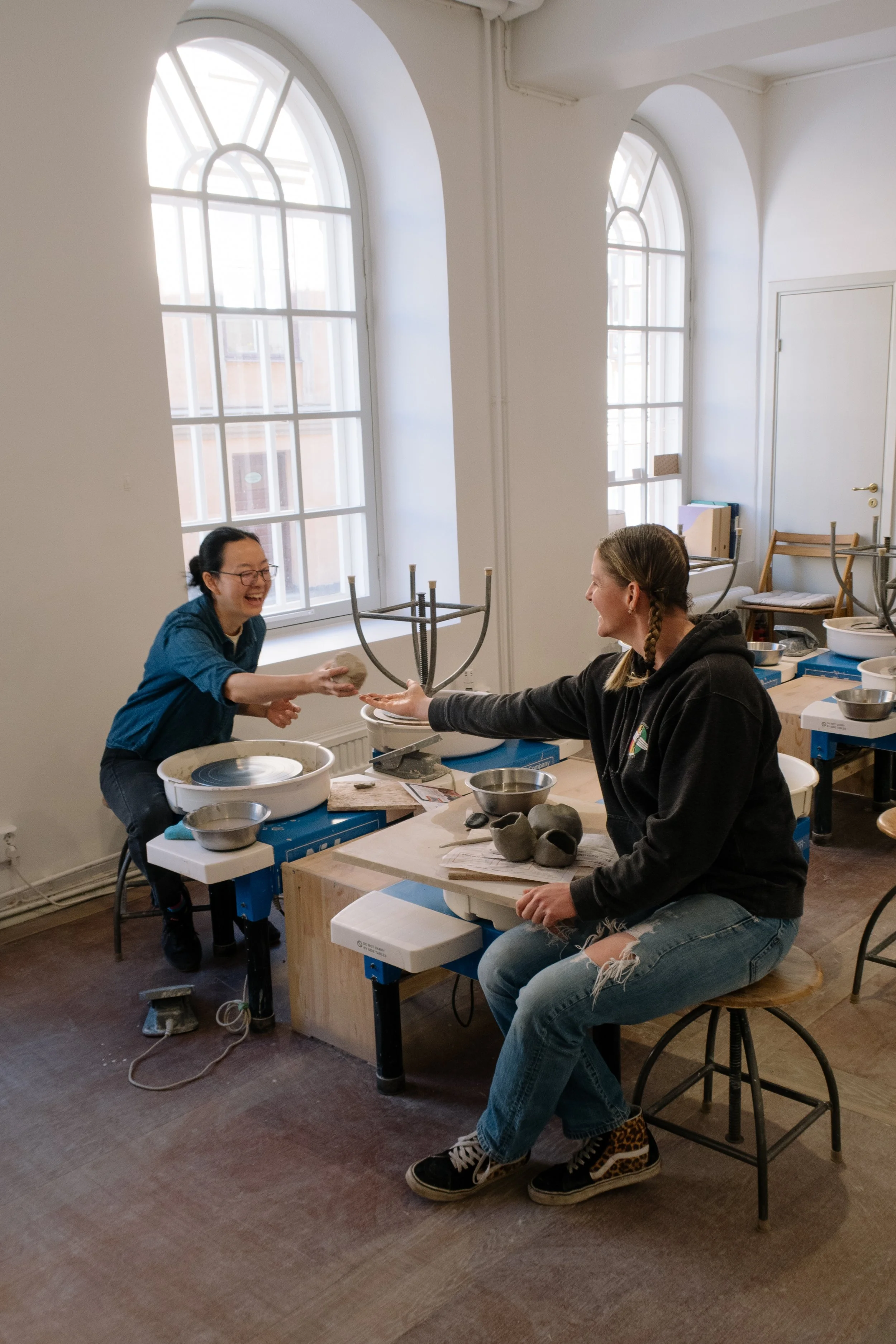
The journey to ceramics wasn't a life dream or longing ideal for Aria or Katy, but rather a gradual shift – a happy accident, even. In an act of serendipity, both women were actually hired on the same day back in June 2021. They take their weekly shifts in turn and host introduction courses and member workshops. Over their give-year tenure, both agree that it is the people at The Slab who have been core to their joy and learnings. “The people who continuously come...They really have a drive to improve their skills,” Katy tells me. “I would totally agree,” Aria adds. “The people I’ve met in the studio have been the most rewarding part of the work. We’ve become friends as well. We even have mahjong playdates!”
Part of The Slab’s offering is its memberships, which give independent makers access to the studio’s facilities and equipment. “The regulars who come in at a fixed time each week become something I really look forward to,” Aria says. “You know you’ll see this person on that day, and then again the following week.”
I ask them about what they’ve learned from their time at The Slab. Any teachable moments? Patience and acceptance seem to be the common ones. “A lot of people come in here and say they have no patience, and that this isn’t for them,” Aria tells me. “But this is exactly what’s good for them, because it forces them to be patient.”
In the early stages of throwing, you really have no control – trust me, I know. My partner could always tell when I’d been at my ceramics class because I’d come home sweaty and stressed. Imagine not acing it on the first try (couldn’t be me). What Aria says next, though, makes me reconsider how I approached that course two summers ago. “It’s not about how you want it; it’s about how the clay wants it to be.”
Katy tends to take a ‘kill your darlings’ approach. “When you’re first learning something and you’ve spent a lot of time on it, it’s easy to get attached,” she says, shrugging. “But it’s just a thing. It’s just stuff.” She goes on to explain how she and Aria are currently developing an intermediate to advanced course, one that encourages people to destroy the thing that they think is perfect – and be okay with it. “I see it a lot, where people say, ‘I don't want to touch it because I'm scared of it now.’ That's not how it should be. Manipulate it, and if it breaks, so what? You can learn something from it and apply that to the next piece.”
On Artistic Identity
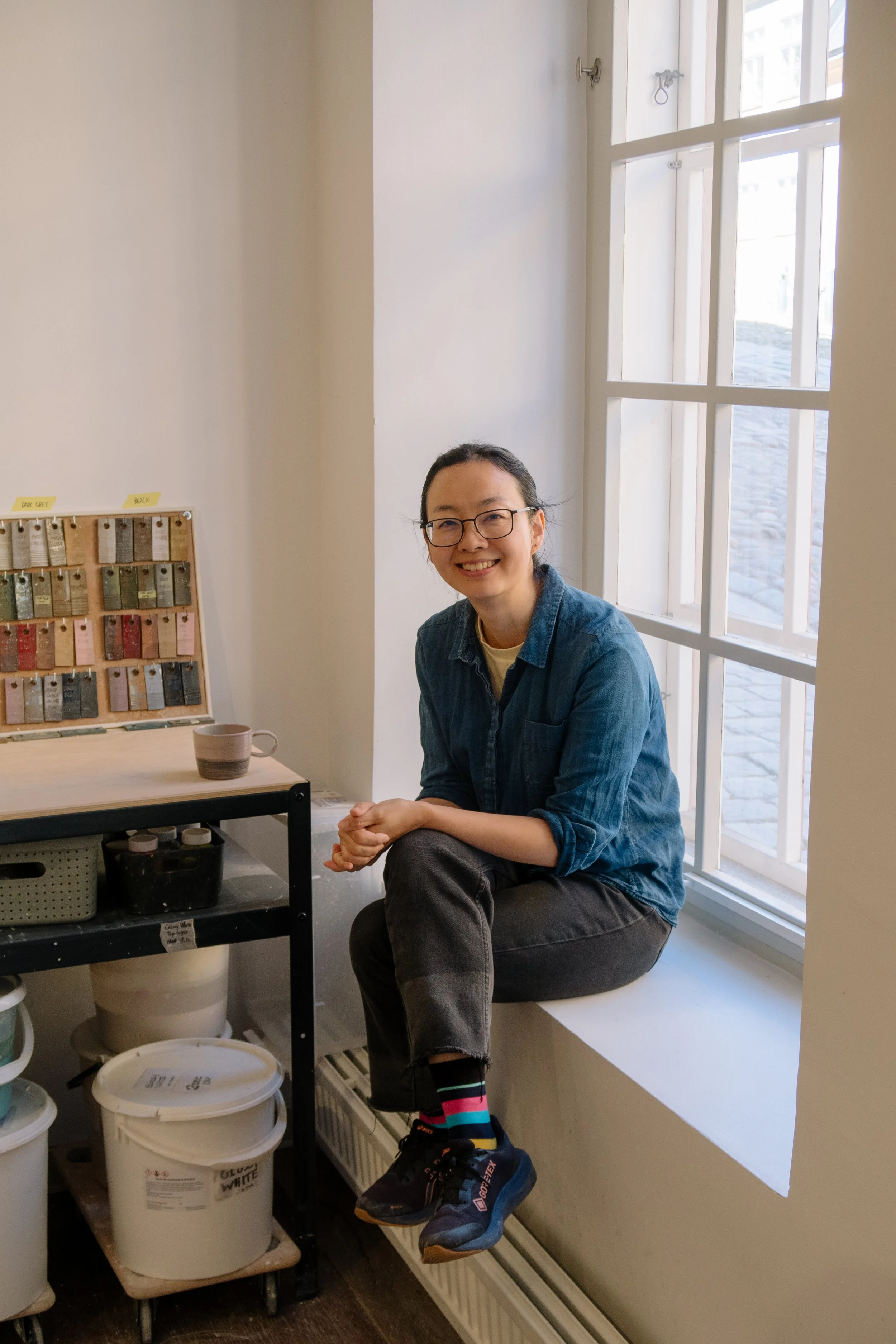
Despite time and talent, Aria still struggles to call herself a ceramist. Preferring the titles of designer and art performer, she describes ceramics as a form of escapism and expression. “It took a painfully long time to realise that I couldn't be the artist that I always wanted to be yet,” she says. “Doing pottery by hand-building or on the wheel gets me out of all these thoughts – it lets me be still inside.”
According to Aria, her current problem is defining her style – or the lack of one. Katy is quick to interject: “I would disagree with you, because I think you do have a style,” she says. “In Aria’s house, there’s this perfect blend of Chinese and Swedish influence. It's really cool. She's made lampshades and pots out of ceramics! There's an aesthetic there that's so hard to define, but it's just so you. It's the organic shapes and forms of it all.”
Katy, on the other hand, describes her style as "looking like November". She prefers to embrace destruction as part of her creative process. “I use a lot of monotones – blacks, greys, whites – because I really like that contrast, that boldness of it.” With their rotating shifts, it’s rare for Katy and Aria to be in the same room. However, they’re often reminded of each other’s presence due to the work they leave behind. “We don't normally meet because we work at different schedules,” Aria says. “But I could easily spot Katy’s work on the shelf without even seeing the signature.”
“It’s not about how you want it; it’s about how the clay wants it to be.”
On Memorable Moments
As humans, we give meaning to things: little trinkets, objects, gifts, possessions. I wonder how this differs when you’re the creator of them, too. “When I was a teenager, I made this pot out of porcelain,” Katy recalls. “We pit-fired it, wrapping it in sawdust, horsehair, and some white copper wire.” She describes it as an ornate jar, with a sculpted little cat sitting on the lid. Recently, her father sent her a photo of it. “My dad has art from everywhere, but he was like, ‘this is one of my favourite things in my collection’. What’s funny is I don't even remember making it; I just remember my dad has it, and that’s special.”
During her apprenticeship with a ceramic artist, Aria began experimenting with liquid clay and casting. Her most memorable piece is a byproduct of this: a tiny, shelled piece of popcorn. She tries breaking it down for me: “We had a bag of popcorn there, so I coated the popcorn and fired that. The popcorn burns out and what's left is the shell, the negative space. So, now I have a very hollow, delicate popcorn at home.”
Aria's other memorable piece is a little more complicated, both in execution and in sentimental value. Marvellously imaginative, her latest art exhibition focused on her personal relationship with spider mites. “I used the material qualities of ceramic to interpret and reimagine the tension between pest and human. One piece, for instance, is a sculpted diary that embodies fear.”
“For me, it’s the happening that makes the art. In speculative design, people join in and do the experience, and their activity and interaction become the art form, rather than the object itself.”
The exhibition process, however, felt somewhat lacklustre to Aria. “It's a very empty feeling,” she confides. “You never know if people get it. You set it up and then take it away. You don't know what happens in the middle.” I’m struck by how I’ve never really thought about the gap between intent and perception from an artist’s point of view. “For me, it's the happening that makes the art,” Aria continues. “With a still exhibition, they're missing that. In speculative design, people join in and do the experience, and their activity and interaction become the art form, rather than the object itself.” But art is subjective, and a lack of reflection says more about a person’s perspective than the artist’s expression. Katy must be thinking the same as she responds to Aria with this: “It's all interpretable. Even though they might not understand why you created it, and what it means to you, there's a high probability that it will mean something to them, in a different way, that's relative to their own experience.”
On Life in Sweden
Despite the complexities of the art world, life outside of it – according to Aria and Katy – seems simple enough. A perfect ‘mysigt’ day for Aria is one where she’s hiking, preferably in the north, with a sauna, beer, ice cream and movie following suit. For Katy, every day is different. If she had to pick, she’d be swimming and walking in the forest with her dogs. Their Stockholm favourites range from a tiny, cosy jazz spot named Glenn Miller Café (Aria’s pick) to The English Bookshop and Volca Coffee Roastery (both Katy’s picks). Katy also has an additional one to add: “There’s an organisation run by an American woman called Dixie Thomas,” she says. “She has a platform called Hej Makers and hosts markets called The Other Side Market, too. She's a very cool person trying to uplift and support artists.”
On The Future
As I begin to wrap-up and pack up my belongings, Aria and Katy start discussing their upcoming projects. Between the member events they’re hosting at The Slab (one being a cocktail and ceramics class) and the final exhibitions, Aria is planning a new personal project involving weeds and invasive plants. Katy’s ears perk up. “I didn't know you had plans for that! But that feeds into what I want to do too!” She launches into her idea of creating a primitive fire, aka digging a hole in her backyard and firing ceramics in the ground. “Yes, let’s do it! That could be so fun,” Aria responds.
As I begin to wrap up and gather my things, Aria and Katy start discussing their upcoming projects. Between the member events they’re hosting at The Slab (one being a cocktail and ceramics class) and their final exhibitions, Aria is planning a new personal project involving weeds and invasive plants. Katy’s ears perk up. “I didn't know you had plans for that! But that feeds into what I want to do, too!” She launches into her idea of creating a primitive fire – effectively digging a hole in her backyard and firing ceramics in the ground. “Yes, let’s do it! That could be so fun,” Aria responds.
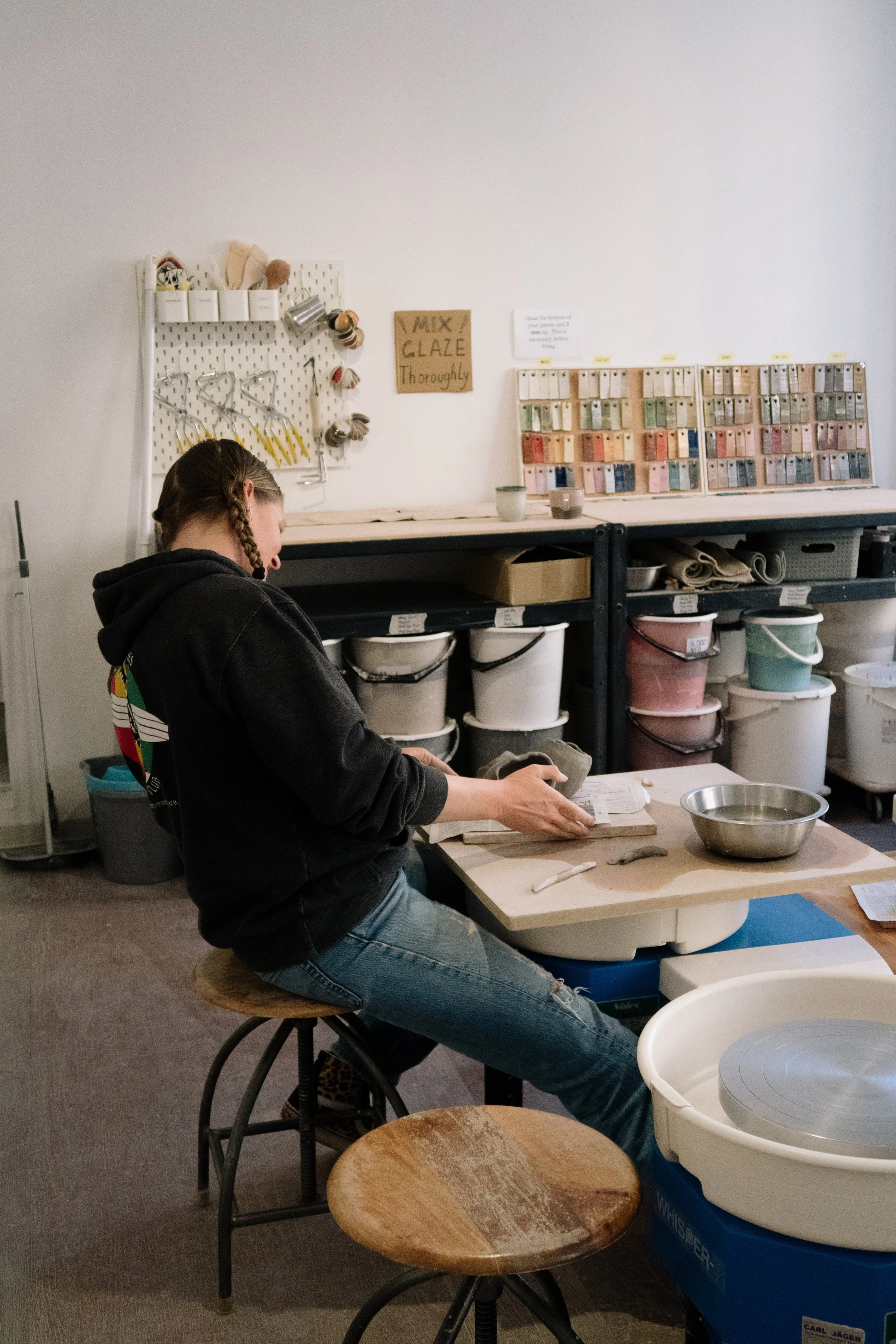
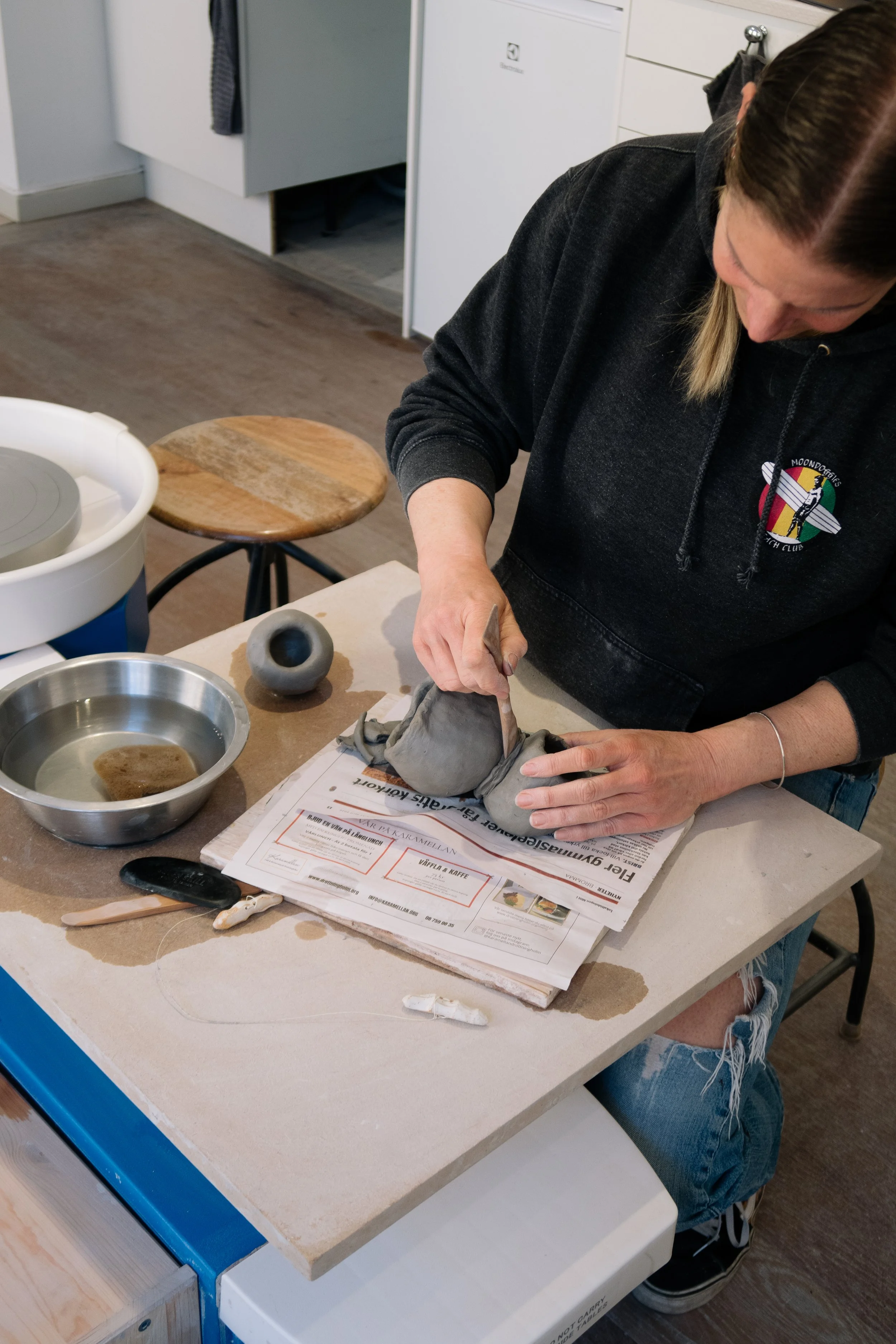
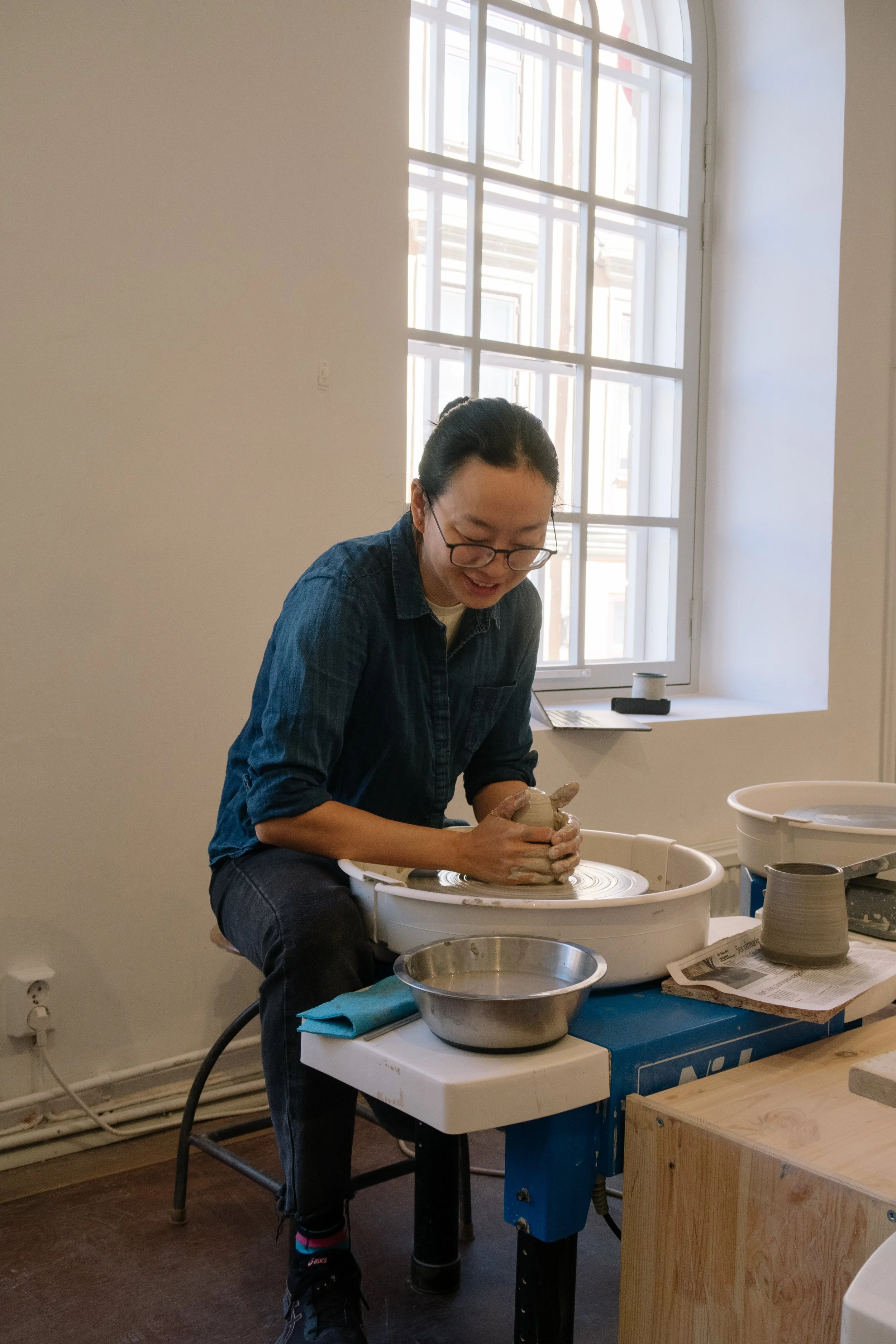
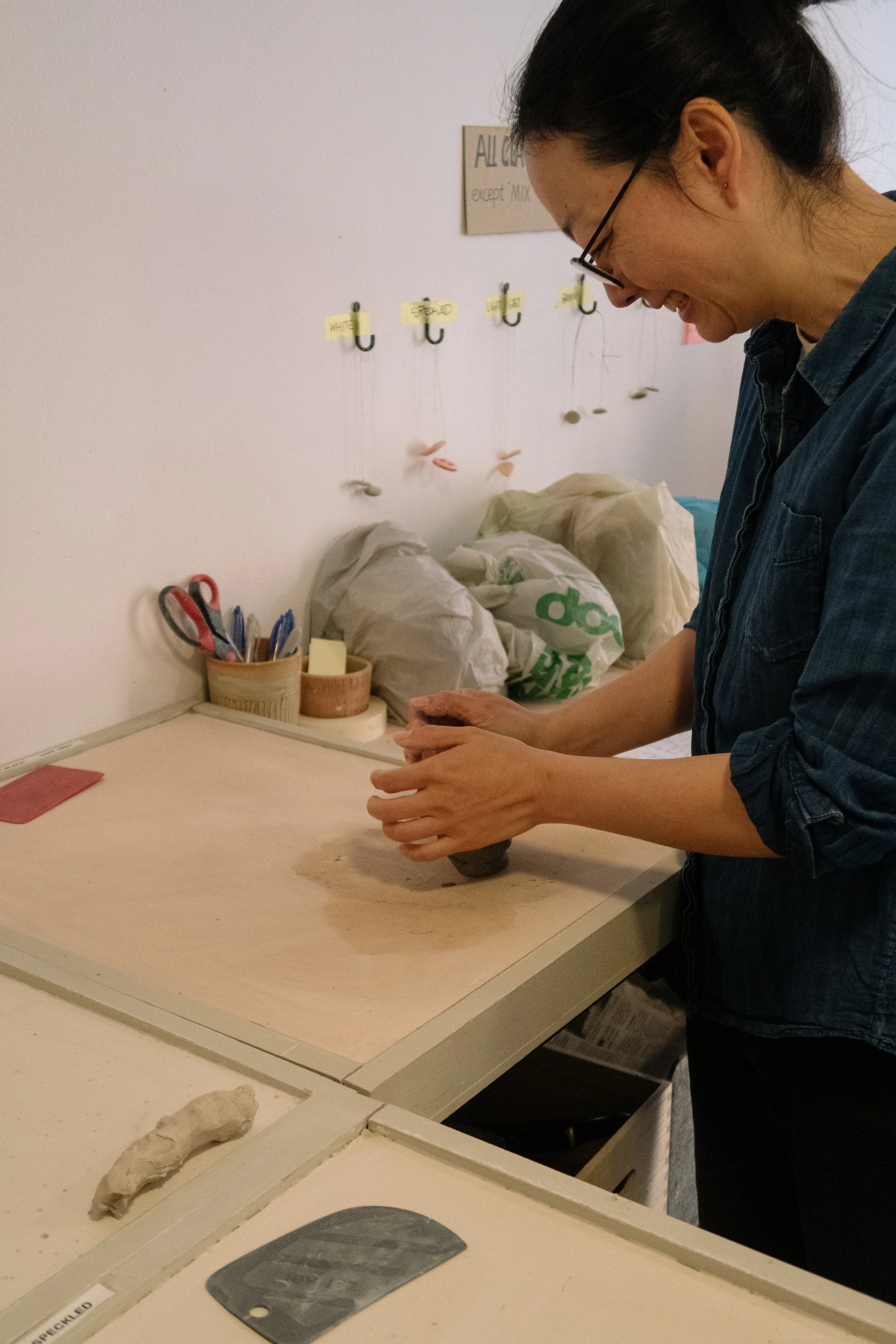
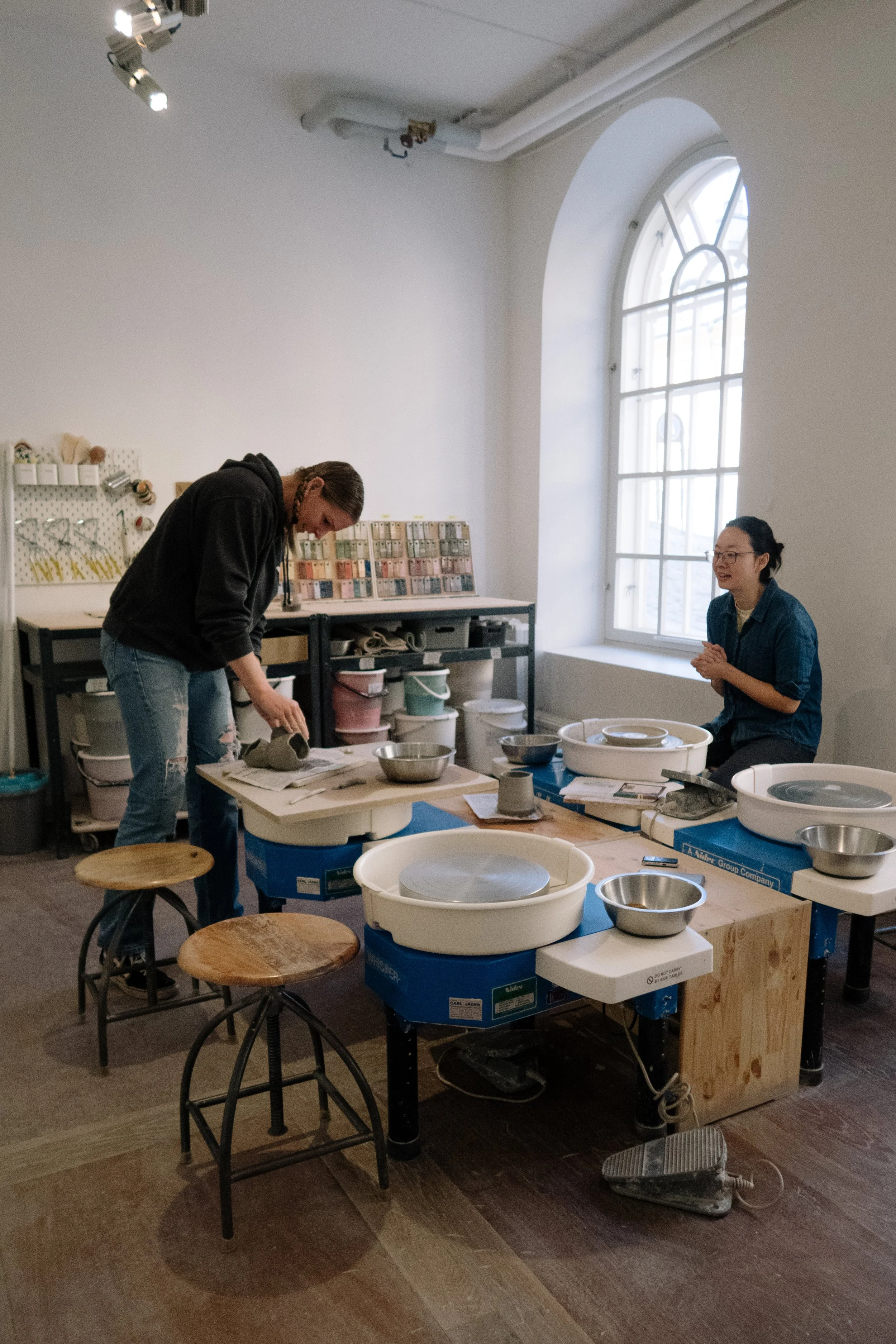
I feel like a spectator at an energetic ping-pong match. The excitement is palpable, as is their passion. Somewhere in between, I hear talk of a totem pole, too. In the meantime, there’s work to be done. The entire time we’ve been talking, Aria has been throwing and Katy has been hand-building. I leave them to clean up their stations. They both encourage me to come back to the studio someday soon, so I can join the festivities and meet new people. I promise them I will. As I go, it’s like I can hear their creative brainwaves – loud, jubilant and full of promise.