
A Life Shaped by Flowers: A Conversation with Liza Langen
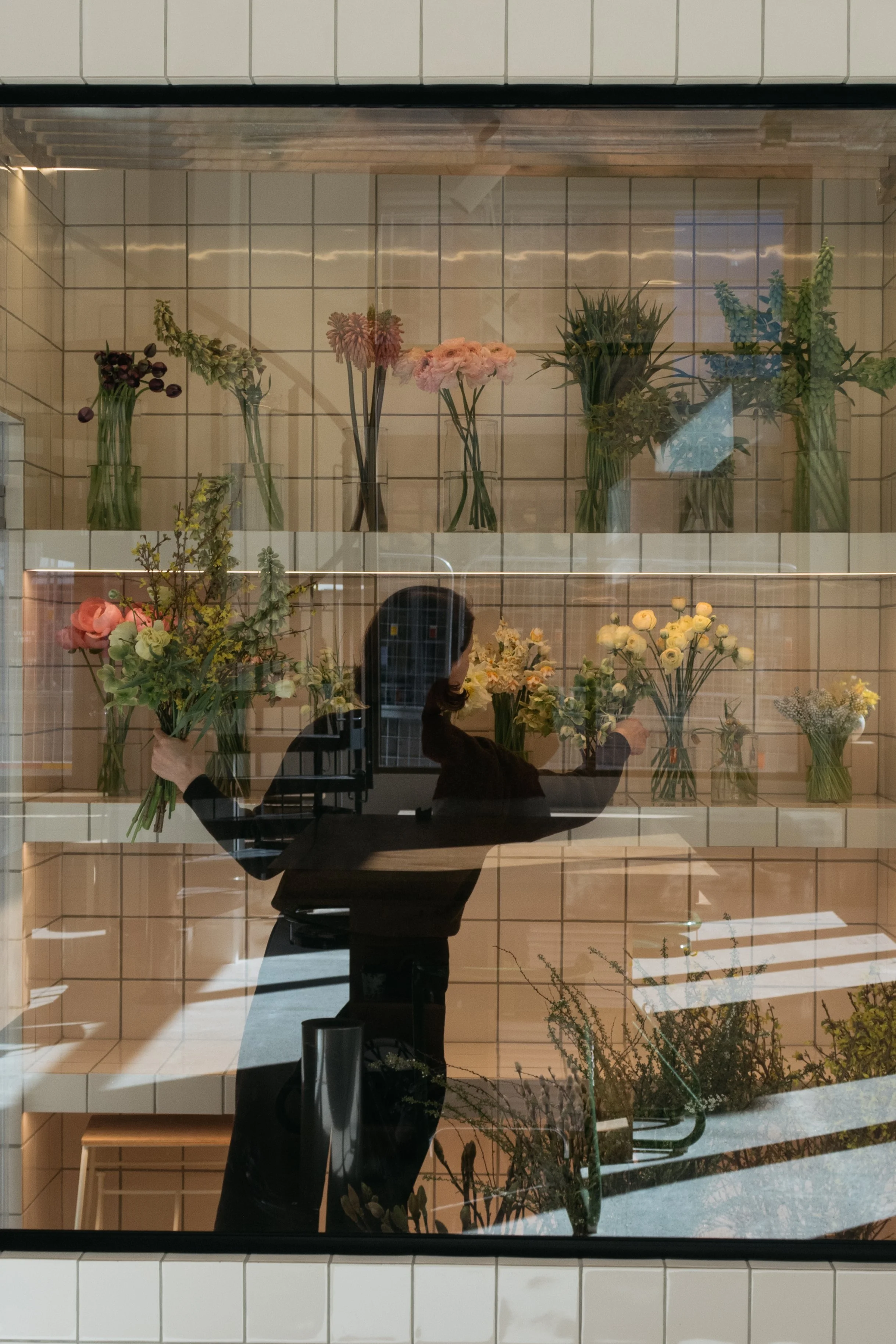
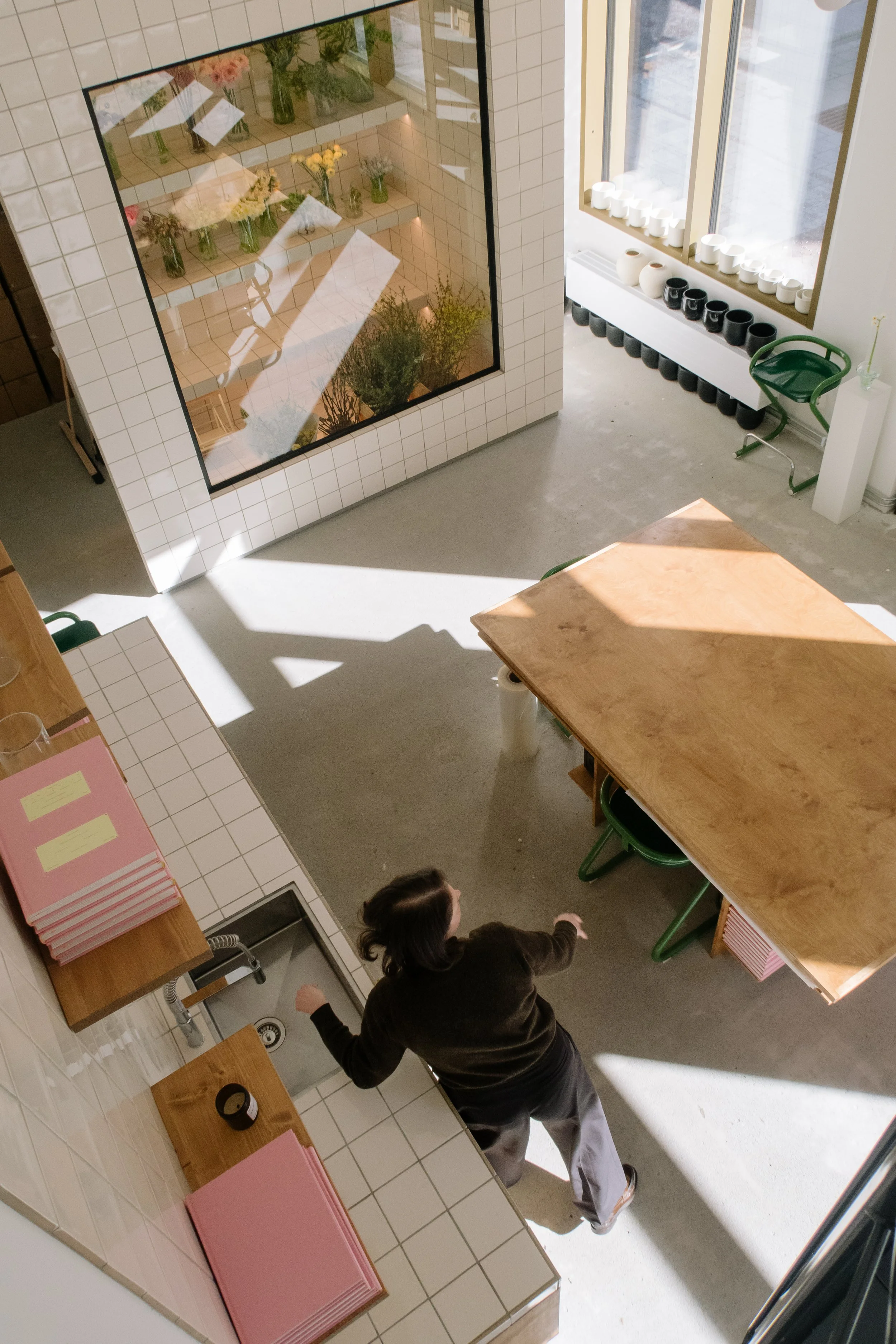
Refrigerated in a polished glass-case menagerie, the blooms are immediately visible – stems of daffodils, blushing pink peonies, and some blue, furry-looking things I’ve never seen before. The morning sun is just beginning to touch the corners of the room, and outside, Nackagatan in Södermalm is only just waking up. The store is immaculate. Everything is neatly stored and beautifully placed, an aesthetic that mirrors its neighbour, Balue – a Nordic-Japanese and Korean coffee and tearoom – which shares the same space.
When I meet Liza (eponymous with Liza Langen Flowers) she exhibits a calming ease, immediately signalling someone who is quietly observant yet forthcoming in their kindness and warmth. We quickly pop out for a coffee – she beats me to paying – and exchange pleasantries about the weather. If she senses my nervousness, she’s kind enough not to mention it. We return to the studio and sit down at the wooden worktable. After that, the conversation comes easily.
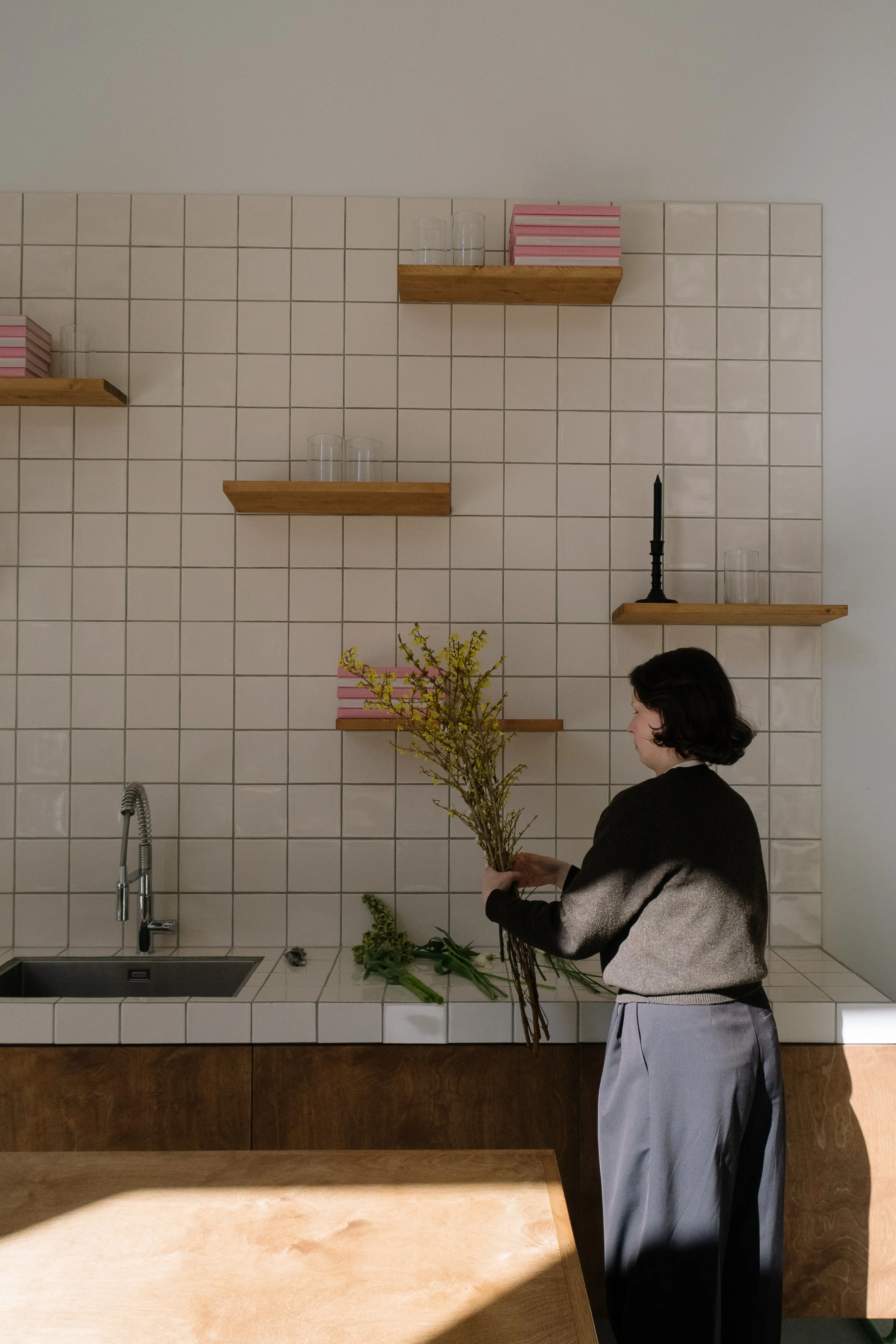
With seasonality being at the core of floristry, I’m intrigued to know if there’s one Liza is fond of most. “Oh yes, this was the hardest one out of all your questions,” she laughs. “It’s really at the core of everything I do. It affects us drastically, and resisting it, I’ve found, is really draining.”
Liza doesn’t take a proprietary attitude towards flowers, but instead appreciates them for what they are: ephemeral. Hence why they never do roses for Valentine’s Day (“it’s not their season in February!”). “You have to appreciate seasonal flowers because they’re only here for a short time, and then you have to wait another year,” she says. “You can’t just go to a store and find them – you have to appreciate them for when they come.”
With most of their flowers sourced from Italy, France and the Netherlands, today’s early spring selection includes fritillarias and ranunculus. Oh, and Liza’s favourite season? Autumn. It takes a while, but I eventually pry it out of her. “It’s a transitional season, full of colour and energy. It’s the most dramatic,” she says. “But don’t even think about asking me what my favourite flower is. I cannot answer that.”
Ten years working as a florist, and two as a shop owner, have resulted in an abundant portfolio. Liza’s work has appeared in the pages of Vogue and Architectural Digest, alongside recent partnerships with Marimekko and Cartier. Albeit 2026 bringing us the Year of the Horse – symbolizing a fast-paced and energetic period – Liza is keen to slow things down.
“Last year was really intense,” she says. “Soon after opening this space, we had a major event with Cartier. I think it’s the biggest production we’ve ever done.” While the event itself ran for a month, the preparation took four. “It felt strange. We had just opened, but I didn’t really get the chance to settle. The event took us by surprise. But naturally, we just rode with it.”
“That’s why flowers are my perfect medium – they change every month. Nothing stays the same for long.”
When I ask her what her focus is for 2026, she says it’s all about “recharging, restoring, and being here.” She looks around, saying “It’s important for me to focus on this space – running the store and learning. This is where I love to be, and where I feel good, positive energy.”
Having her own space wasn’t something that always appealed to Liza though. “When I started this company, I never wanted to have a flower store,” she recalls. “Essentially because I love change. I get bored very easily and quickly. That’s why flowers are my perfect medium – they change every month. Nothing stays the same for long.”
After meeting her partner Niklas, whom she will soon celebrate ten years with, her thinking around what it means to ‘lay down roots’ began to shift. “I felt that a sense of community was becoming the most important part of my work. That thinking, quite literally, opened these doors,” she says. “This was the first space I saw. There was nothing to it. But when I walked in, I had this strong feeling: if I don’t get this place, I don’t want anything else.”
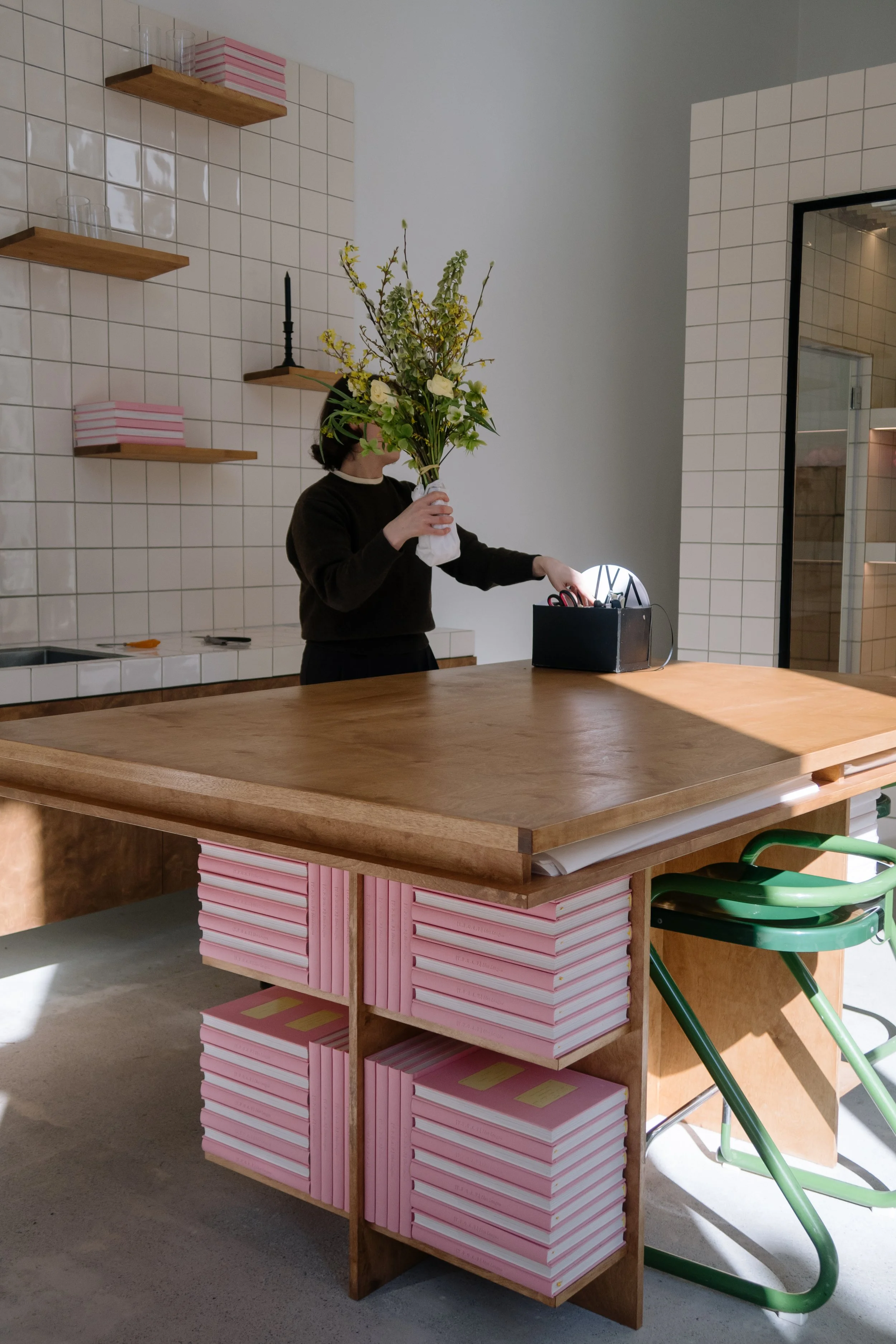
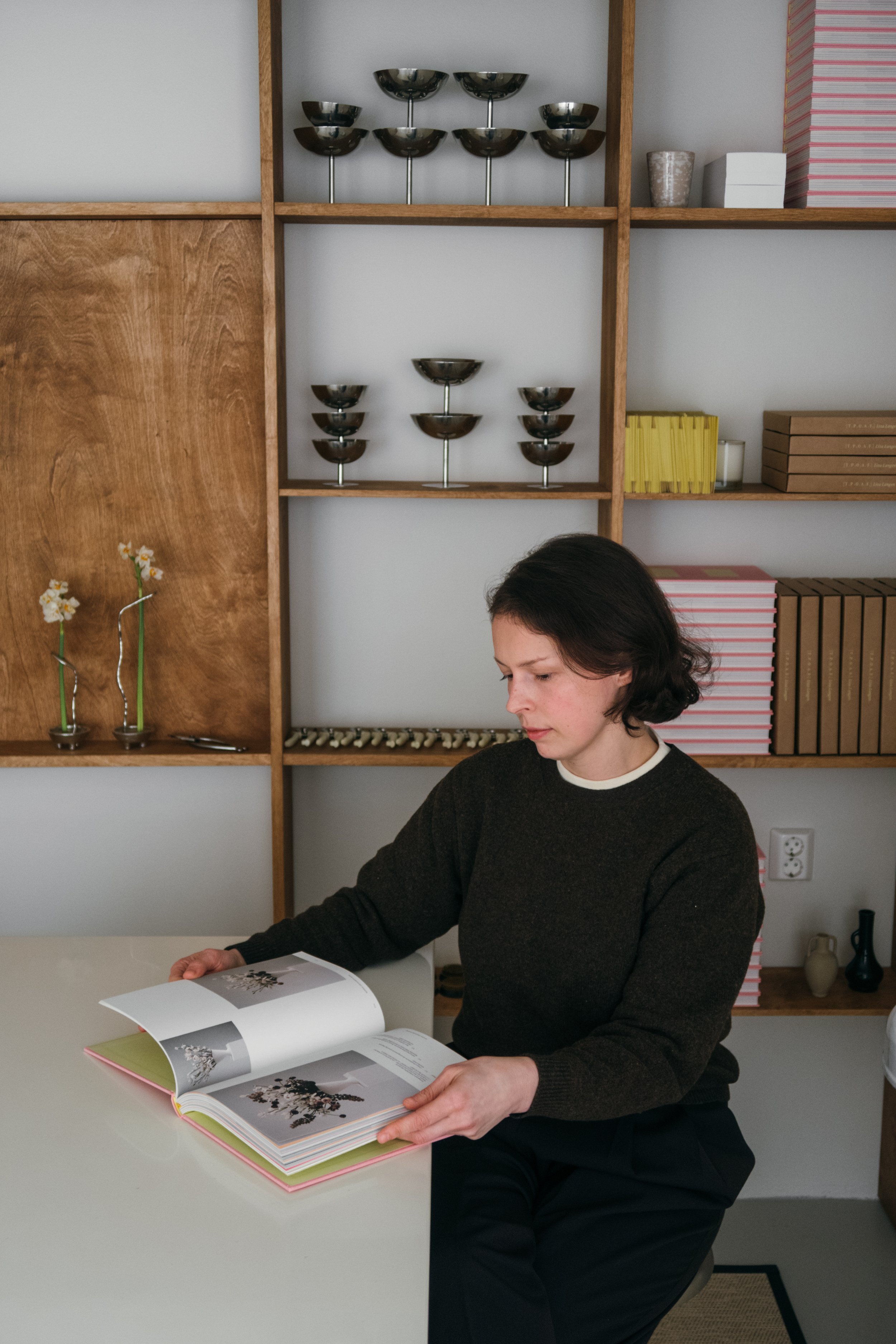
It seems almost baffling now to imagine Liza’s life before floristry, when she spent many years working in corporate finance. Yet it was precisely that background, she says, that helped her develop the pragmatic mindset needed to plan her way out of it. The common perils aimed at new business owners leaving full‑time work didn’t seem to deter her. “I’m a pretty flexible person. I wouldn’t be shy in saying that multitasking is my gift. Those qualities really helped me build a stable and growing company,” she says. “The stories I have from those years… It was a lot of hard work, a lot of headaches and challenges. But it felt great. Not easy, but great.”
Perhaps not always overt, but ever‑present, Liza’s connection to flowers runs deep. Born in Russia, she speaks fondly of her upbringing, with her grandparents’ backyard forming the backdrop to her childhood. “I didn’t realise it when I was younger, spending summers with them,” she says, “but as I got older and moved abroad, I began to understand what the dream of creating a home with a garden meant to them. I remember being like, ’you could travel the world and do all these things, yet you chose to spend your days in this garden, why?’”
Since creating a family of her own – now mother to Nova, five, and Louis, three – the desire to build a home and put down roots has become a greater priority for Liza. “I started thinking back to how much time we spent in that garden,” she says, smiling. “Everything always grew in abundance there. And they did it for us… a true labour of love.”
Liza speaks of that garden as her first connection to home. During spells of homesickness, she would send photos of the flowers she began picking for her Stockholm apartment to her grandmother. In return came care tips, along with photographs of the blooms her grandmother was still growing back home. “It was a way of communicating, a way of being together, even though we were apart,” she says. “Over time, I realised how different I felt around flowers. I realised how much peace, freedom and energy they gave me.”
“You could travel the world and do all these things, yet you chose to spend your days in this garden, why?”
Attaching nostalgia to flowers isn’t an uncommon thing. Liza smiles when I ask her if there's one that takes her back to her childhood. “Yes, gladiolus,” she says, as I make a mental note to Google them later. A late summer flower that’s dramatic in shape and size, gladiolus is easy to grow and fairly cheap to buy. They also happen to be Liza's mother’s favourite, too. “In Russia, there’s a tradition that on the first of September, when school starts, kids will bring a little flower bouquet to their teachers. I always chose gladiolus, which were literally taller than me!” she says, arms outstretched. “I remember feeling so insanely proud that it was from my garden – which it wasn’t, it was my grandmother’s – but I told everyone it was mine.”
Liza left home a long time ago. After briefly living in Brazil, and later Italy, her move to Stockholm has proved a more permanent one. Clean, vibrant and picturesque, it’s a relatively easy city to fall in love with. So, when I ask how she felt about moving here, her answer surprises me.
“It wasn’t love at first sight. Stockholm was really cold and hard to come to as a city.” When I ask if she means the weather, she shakes her head. “I am from Siberia. I know what cold is. That doesn’t scare me. I love winter. It’s the darkness, and the people not really talking to each other.”
The cultural perception goes that Sweden is a reserved, "non-social" country. One that’s not so far from the truth (if you’re asking an immigrant). “I think it was a combination of me not being willing to invest in the city, and Stockholm not being very open either,” she says. “But with time, I realised you have to make an effort to explore. And I mean real places – local places – not just what appears on a top‑ten list on Instagram. Once you do that, the city opens up to you.”
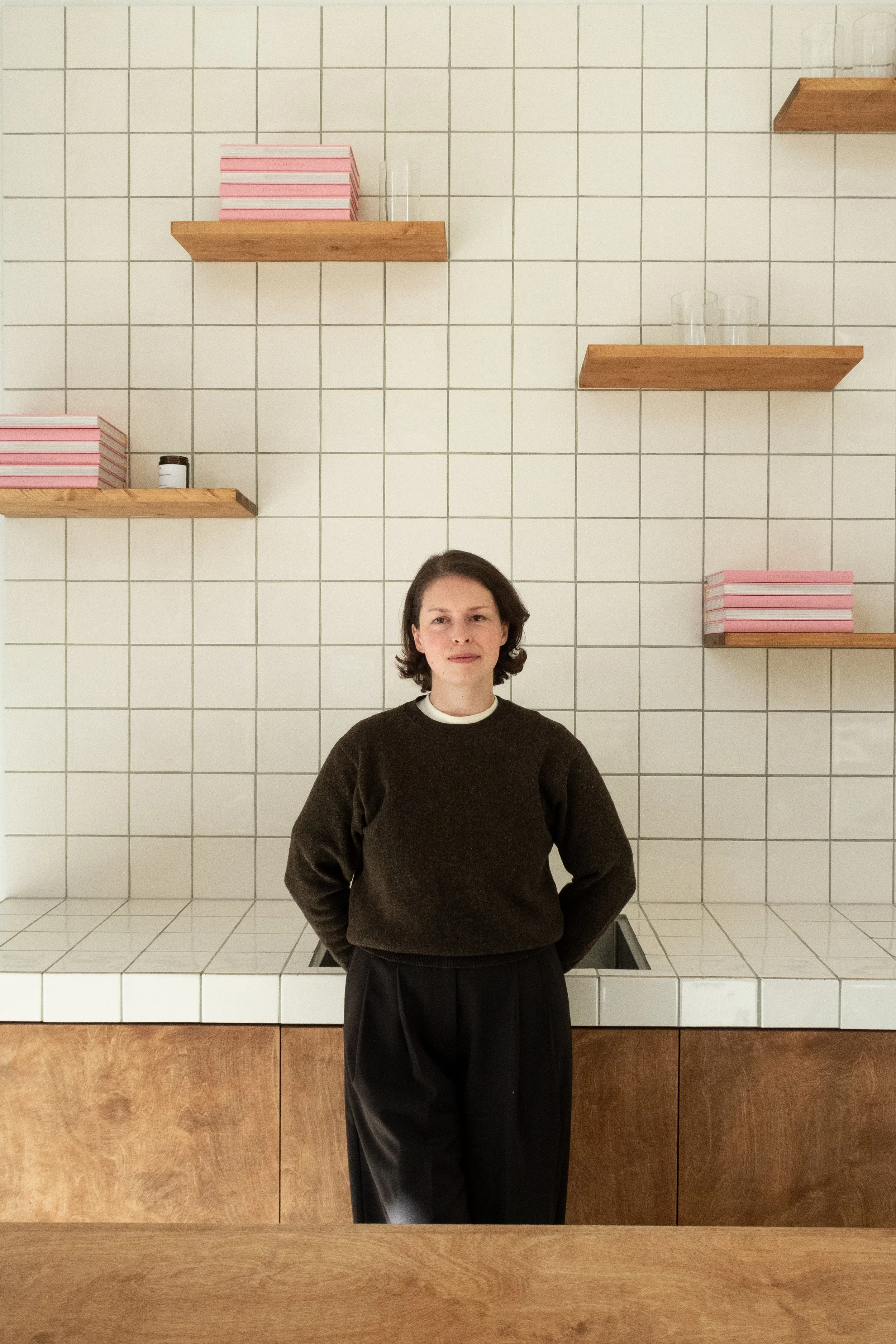
Fourteen years into life in Stockholm, Liza and I talk about the surreal feeling of finally living in the neighbourhood you once dreamed of when you first arrived. For her, it’s Hammarby Sjöstad; for me, Zinkensdamm. “When I’m in the neighbourhood, I feel such a deep sense of gratitude that my dream has been realised,” she gushes. I ask if she has any local recommendations. She lights up immediately, diving into an anecdote. “Magnus Johansson Bageri & Konditori,” she says. “What I love is that when I drive past at 5.30am on my way to the flower market, I see the founder outside, putting up the umbrellas and cleaning the tables. I love that so much.” She laughs. “We love it so much, in fact, my kids now call him Uncle Magnus.”
On the topic of her children, Liza softens immediately. “Babies are cute, but right now is an amazing time. We can share our interests and do things together, which is really fun. I’ve also done some solo trips with Nova – whom I’ve found my travel soulmate in.”
As someone who is childfree, and doesn’t expect that to change anytime soon, I’m genuinely curious about how women navigate the transition into motherhood. “It’s not even about finding balance, because I really don’t believe it exists,” she admits. “But I want to create space for both – for being a mother, and for being me. It’s a learning curve, a huge adjustment, and it will take the time it needs.”
On the rare occasions she and Niklas have time alone – “a gift from their grandparents,” as Liza calls it – they tend to stay close to home. Nothing too fussy; just beloved local favourites. A recent rainy day during the Easter break was spent at the Picasso exhibition at Moderna Museet, followed by lunch at Gazza, a small Italian restaurant in Södermalm, and finally a nightcap at the arthouse cinema Bio Rio, in Hornstull.
You could argue that Liza’s busy schedule isn’t entirely devoid of self‑affliction. Ambitious by nature, she’s constantly brimming with ideas and projects – like a moth to a flame, or a bee to pollen, if you will. This tendency is evident by her self‑published book, The Practice of Arranging Flowers & How to Embrace Seasonal Change, released in 2024.
Grounded in seasonality, the book is divided into four chapters, each woven with unique arrangements and personal stories. What began somewhat as a literary earworm, prompted by her husband’s gentle persistence, came to Liza in an “epiphany moment.” The production took almost two years in close collaboration with designer Peter, and analog photographers Melanie and Paul, who flew in from Spain for each shoot.
“I decided to self‑publish because I didn’t want to agree on anything,” she says, defiantly. “I didn’t need it to be fast or a certain way to sell. I needed it to be my way.” Produced in Sweden, the book has since been shipped to nearly 50 countries. “Now it’s out there, living its own life,” she adds. “I feel incredibly humble and proud at the same time.”
“I didn’t need it to be fast or a certain way to sell. I needed it to be my way.”
Now halfway through the year, Liza’s next few months look like this: an upcoming project with an art gallery, and a collaborative brand with Marion Ringborg called Seed To Table (they just launched in May!). It’s a big year. In honour of her promise to slow down and stay put, she’s also planning to build a garden.
“I’m going back to my roots… and making my own,” she says. “We’re hoping to plant it this spring, just outside the store. It will obviously take its time to grow – as it should – but by the end of summer, we’ll start to see the first look of it.”
In a touching, full circle moment, the garden has become an ode to her grandmother, and the love language they share. And why stop there? Now, Liza is paying it forward, inviting a new generation to fall in love with flowers in the same way she did. “A garden doesn’t have to mean a house and a big part of land,” she says. “It can be a balcony...or it can be outside your store. It has to start somewhere. So we’re starting here.”
LIZA LANGEN FLOWERS
@lizalangen_flowers
enquiry@lizalangen.com
Nackagatan 5, 116 49 Stockholm